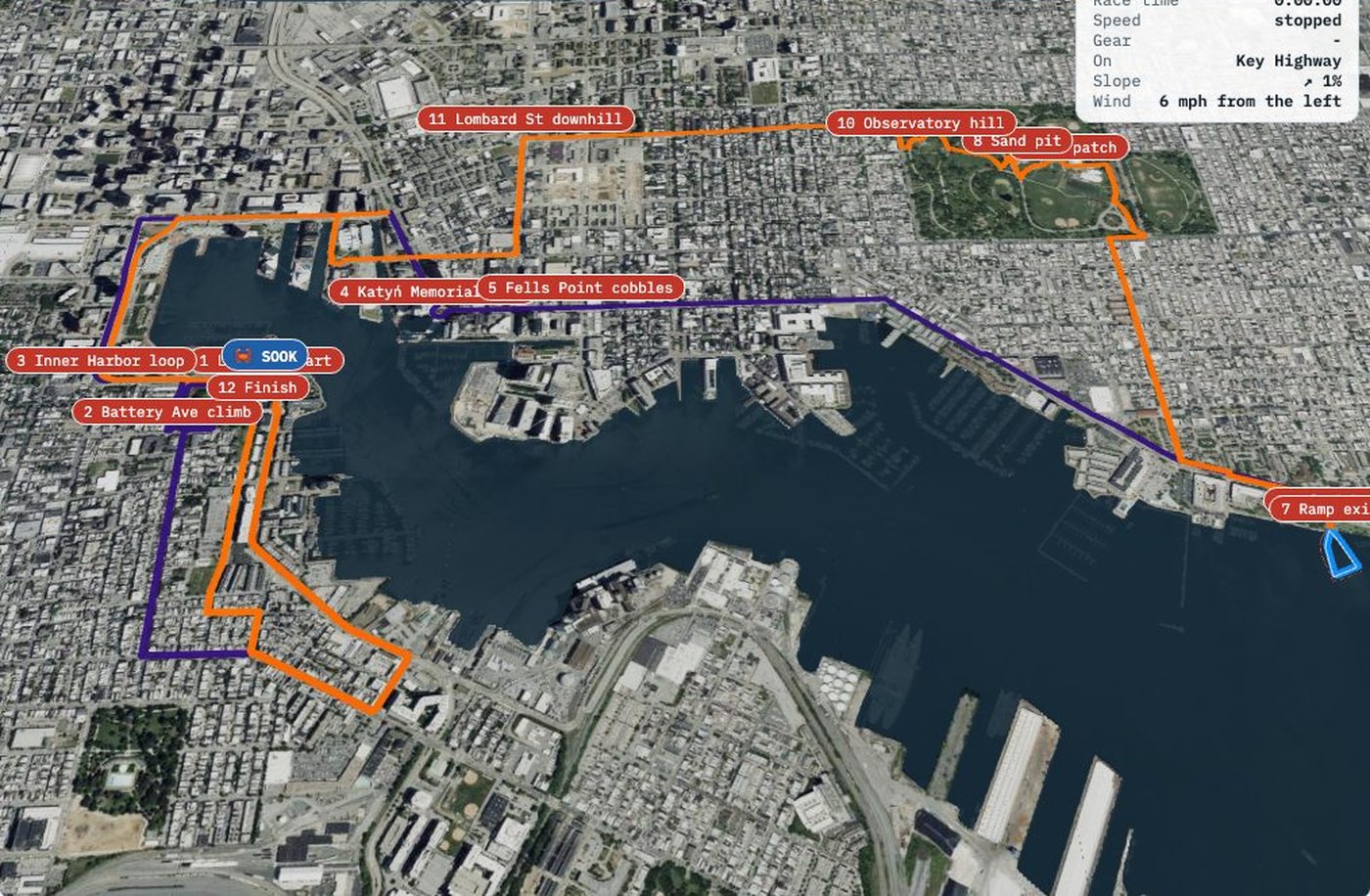
Metal is expensive. Mistakes in metal are more expensive. So before we cut a single tube, we built SOOK in the computer.
Step 1: draw every part#
I design her with Claude, an AI assistant. Together we model every tube, plate, bolt and bearing in 3D, and the computer makes the drawings and cut lists our chief builder works from. If it isn't in the model, it doesn't get built.
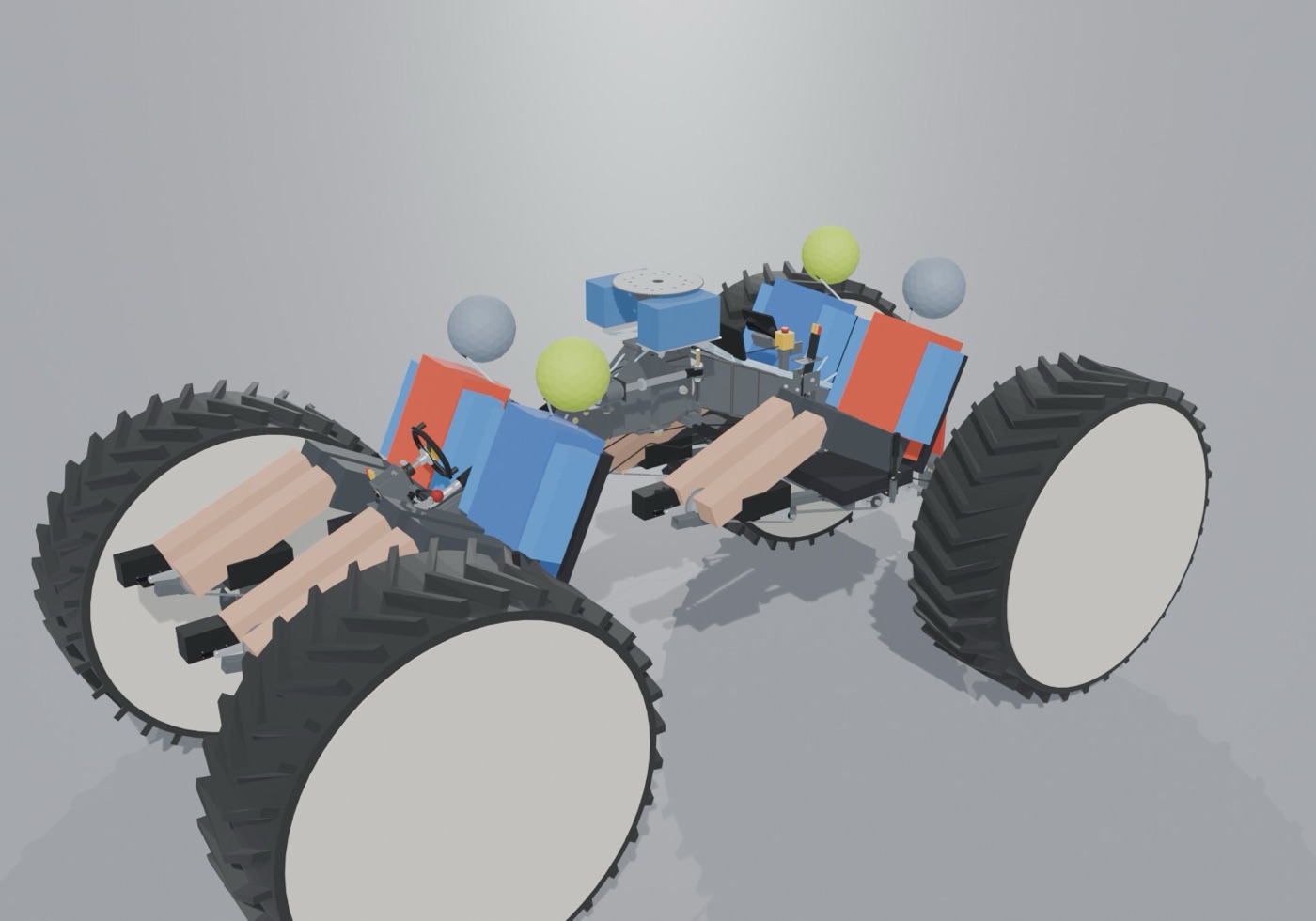 3D model rendercomputer model
Step 2: try to break her (on purpose)#
Next we ask the computer to push on the frame the way a race day would: bumps, curbs, four grown-ups, a crab spinning on top. It shows where the metal would bend.
Our very first frame was a simple flat ladder. The computer broke it. Badly. So we redesigned it until it passed, then had a second review check it all again. Way better to find that out on a screen than on Federal Hill.
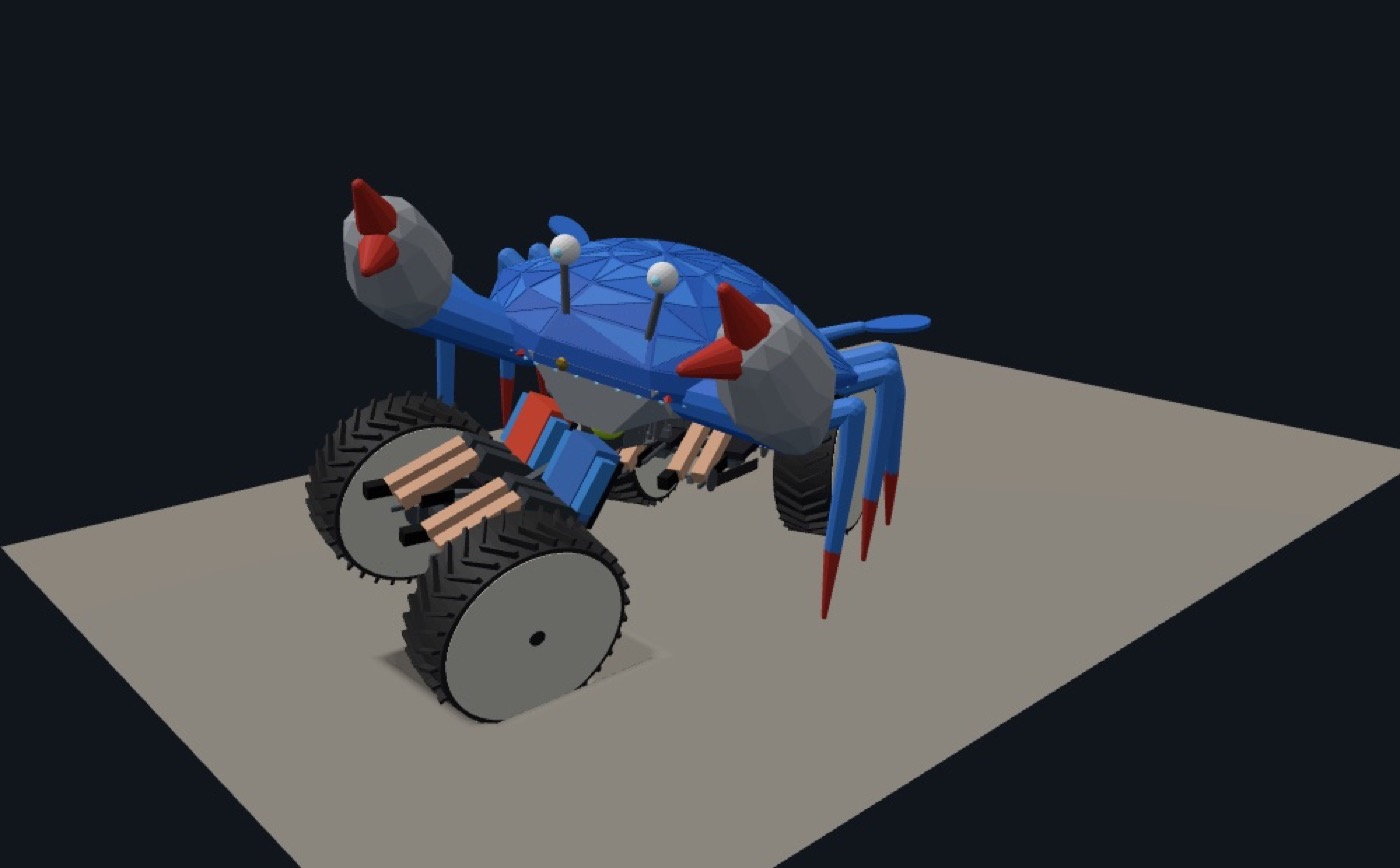 Screenshotour software
Step 3: drive the whole course#
Then we built a digital SOOK in a physics simulator (the kind used to test rovers and tractors) and drove her over a 3D map of the real course.
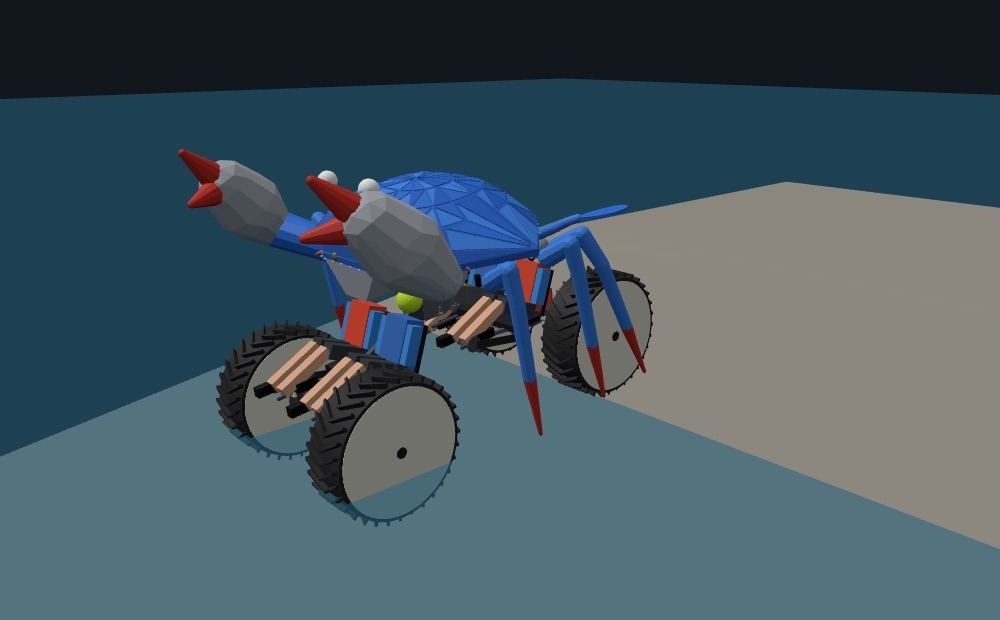 Screenshotour software
Some things she handled fine: the sand, floating, and climbing back out of the water. Some she didn't. Rolling off a curb fast is a real jolt, so our pilots now have a rule: off a curb, crawl.
We even simulated the wheels on their own. The computer squashed one drum's rubber tread against the road, blade by blade, and found it rolls about twice as easily as we'd guessed. That's free speed.
Step 4: race her 500 times#
We put four virtual pilots in the seats. Each has a body that gets tired, like a real rider. Then we raced the whole day 500 times, changing the wind, the crew, the weights and the line at the boat ramp each time.
The big question: can we get into the water by noon? (The race closes the splashdown at 12:45.)
The answer so far: the cutoff looks safe. Noon is tight but doable, depending on the line at the ramp. The plan that works best is simple. Push on the hills, and push whenever we're behind the clock.
Step 5: let AI drive#
We also let an AI called Jev make the pilots' calls: how hard to push, which gear, when to shout "1-2-3 PUSH!". Thousands of decisions per race, and the whole experiment cost about four dollars. On normal days it matched our best simple rule. On tough days, when we were behind, it didn't push hard enough. So for now, the plan is for the pilots' screen to use the simple rule. Every real mile is still people.
What surprised me#
How quickly AI put all of this together, and how much detail it simulates: every joint, every gear, every pilot's tired legs. I also didn't expect it to come back with ideas for a whole set of screens to run the race (next episode). And I didn't expect Jev to do so well for so cheap.
The catch#
"Simulates every detail" is not the same as "right". A computer is a very good guess, not a crab. So every big answer gets checked by a real test:
- 🛑 Dec 10: the first piece of frame gets loaded with sandbags.
- Drum #1 gets towed down the street to measure how easily it really rolls.
- The first rolling chassis goes off a curb with a phone strapped on to measure the jolt.
If the real thing disagrees, the real thing wins, and we fix the model.
Josh
Follow along: the RSS feed, or @sookthecrab. Select any sentence to share it.